
Give the products room to establish the brand
Large photography and restrained surrounding layouts carry much of the visual character. Clear headings and calls to action connect that presentation to the next browsing step.
A fashion and fragrance storefront prototype that combines an editorial brand introduction with a searchable catalogue, detailed product pages and an interactive shopping-bag demonstration.
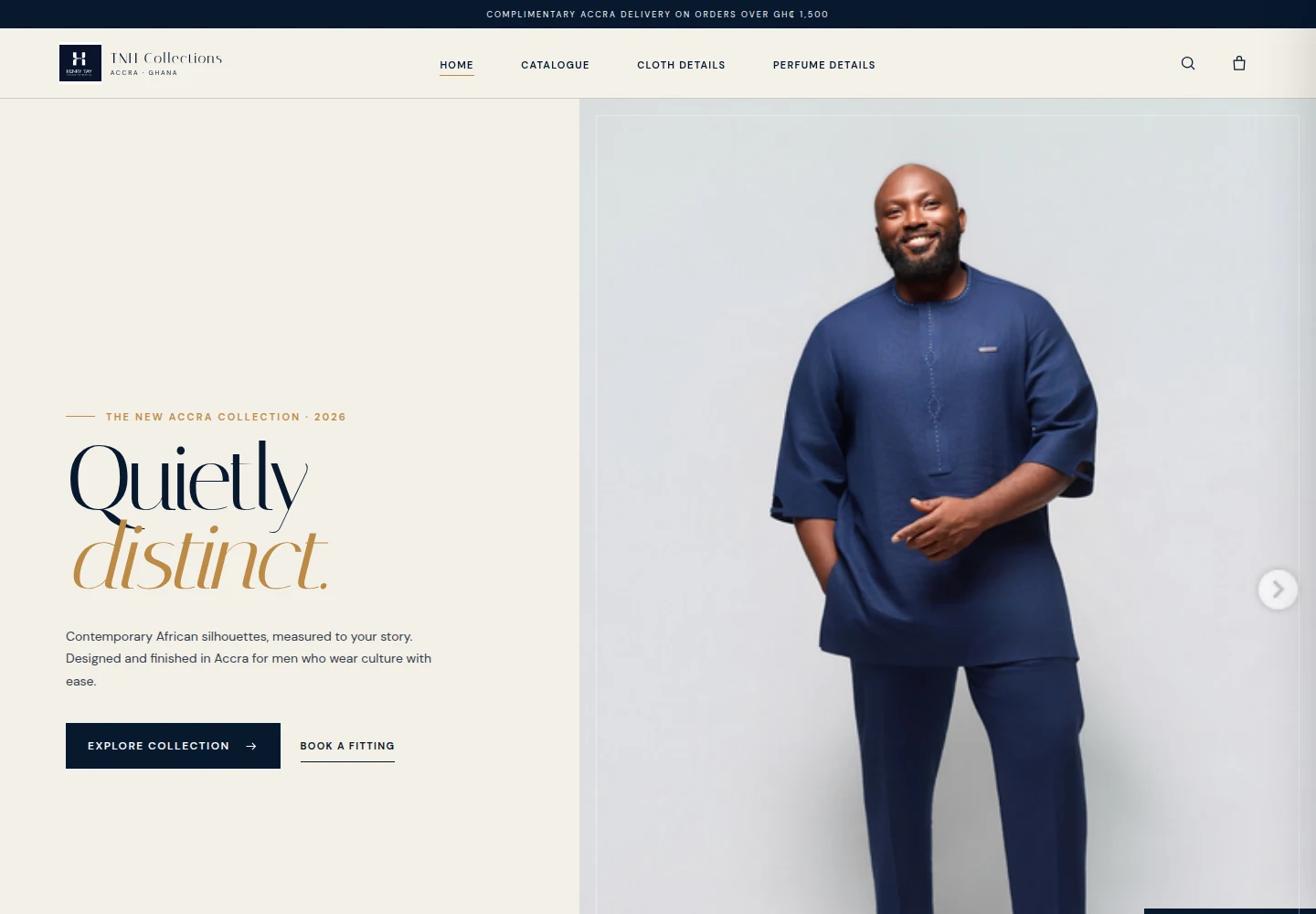
The TNH Collections prototype presents a fashion and fragrance brand through an Accra-focused creative direction. The experience brings ready-to-wear pieces, bespoke tailoring and a house fragrance into one digital destination, while allowing each category to communicate its own details.
The published prototype consists of a homepage, catalogue, clothing detail page and perfume detail page. Those destinations connect the brand narrative to more practical browsing and selection tasks. Visitors can explore the collection, narrow the product list, inspect a garment or fragrance and try the shopping interface without a production commerce service being assumed.
This is a website and shopping-interface prototype. Displayed products, prices and fulfilment terms are demonstration content. Fitting, newsletter and checkout feedback do not establish confirmed requests, subscriptions or payments.
Fashion presentation benefits from strong photography and a distinctive atmosphere, but visitors also need to understand product differences, options and prices. Bespoke clothing and fragrance introduce different types of information. The design needed a shared identity with enough flexibility for those distinct buying considerations.
The homepage pairs oversized serif typography, warm neutral surfaces, deep navy and gold accents with large product photography. It introduces the collection, the brand story, made-to-measure clothing and fragrance through separate sections that lead into the catalogue and detail pages.
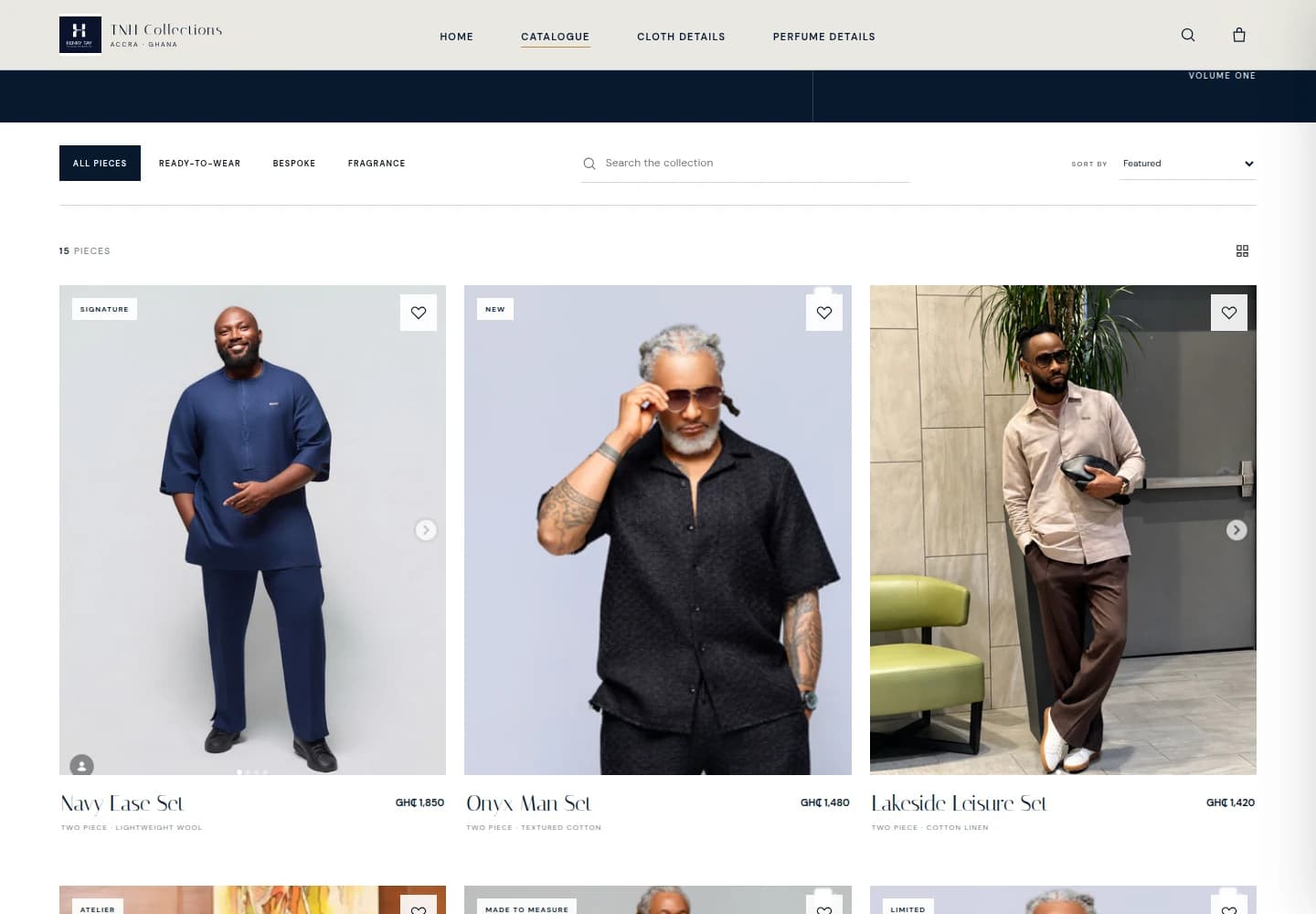
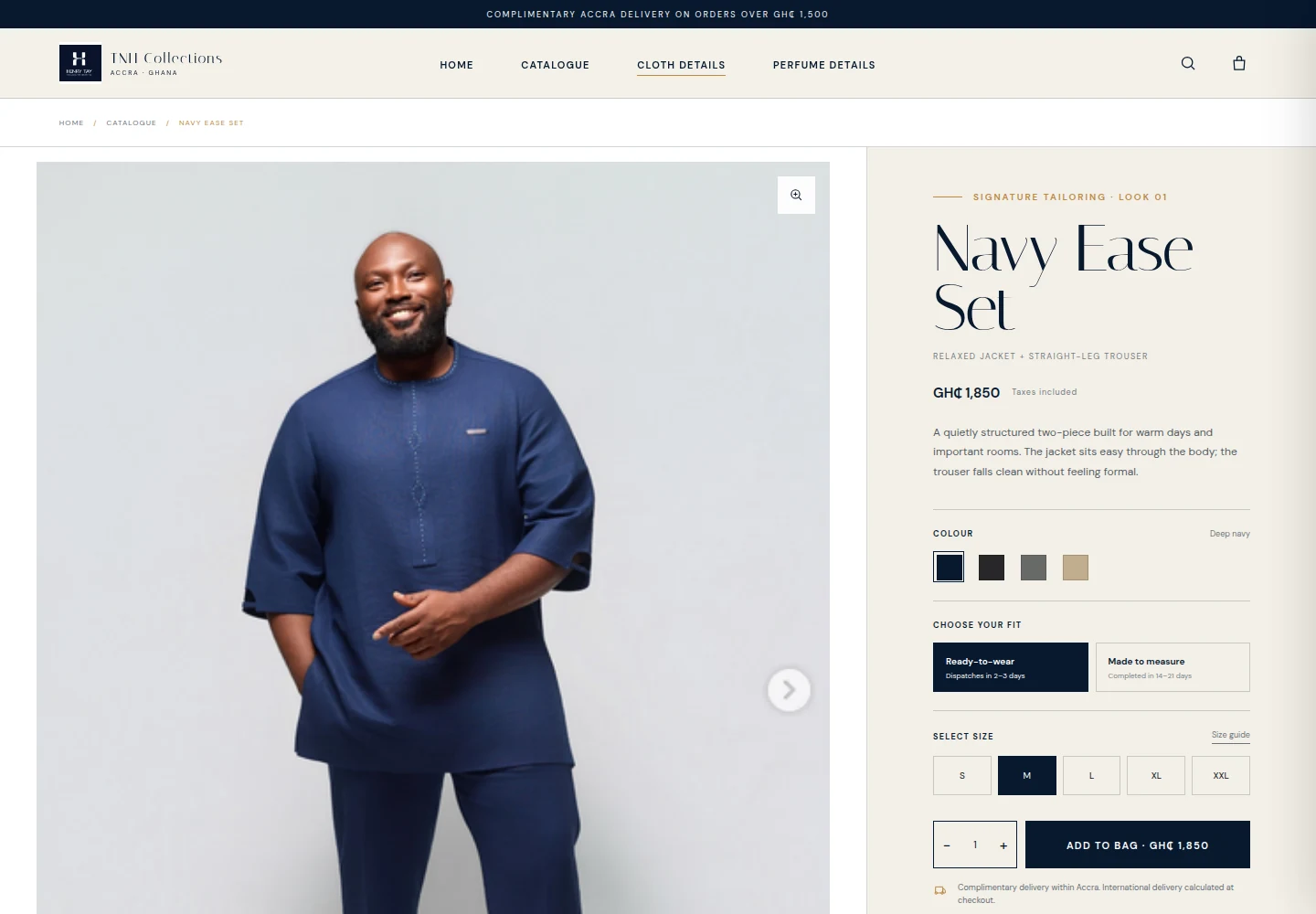
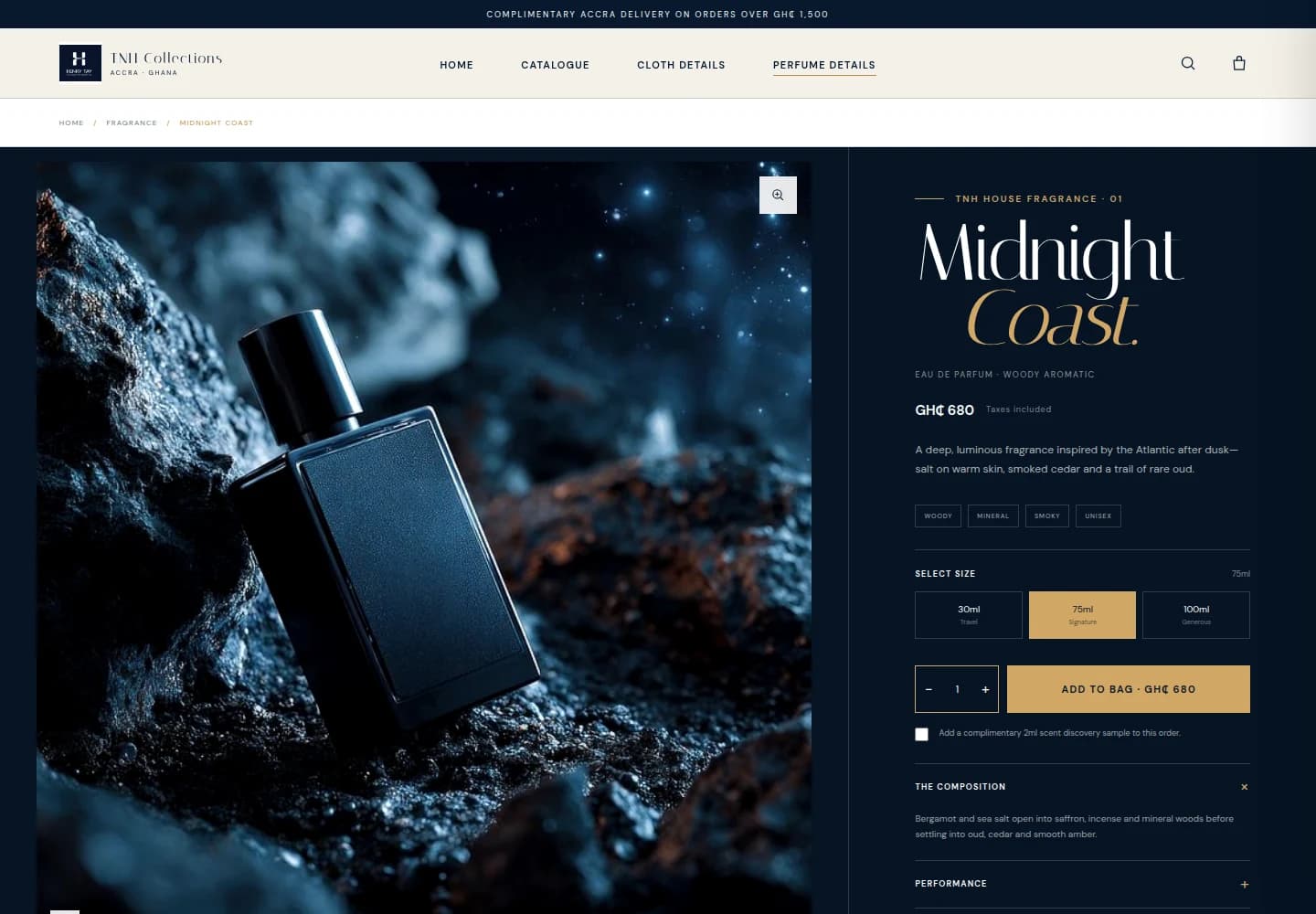
The catalogue shifts into a more structured product grid with category tabs, search, sorting and quick-view controls. Clothing and fragrance then receive different detail layouts: garment colour, fit and size options sit alongside fabric and care information, while the fragrance page explains its note structure, size choices and scent presentation. A shared bag drawer makes the selection interface visible throughout the experience.
Large photography and restrained surrounding layouts carry much of the visual character. Clear headings and calls to action connect that presentation to the next browsing step.
Clothing pages focus on fit, colour, construction and care. Fragrance content uses note groups, composition and size choices. Shared navigation keeps those different experiences within one storefront.
Prices, option choices and bag actions sit beside the product imagery and description. Supporting details are grouped into expandable sections so the main selection area remains readable.
Collection highlights, the brand story, bespoke tailoring and fragrance sections create routes into the different product experiences.
Category tabs separate all pieces, ready-to-wear, bespoke and fragrance. Search and sorting help visitors explore the demonstration product range.
Image-led cards, product galleries, quick-view interfaces and related pieces support browsing at different levels of detail.
Colour swatches, ready-to-wear and made-to-measure choices, size selection and quantity controls demonstrate the garment selection journey.
Bottle-size options, composition, top, heart and base notes, and expandable product information give fragrance its own content structure.
Browser-side bag controls show selected items, quantities, removal and subtotal updates. The checkout action displays prototype feedback rather than processing a payment.
The published design uses linked HTML pages, CSS and page-specific JavaScript. The presentation carries a consistent header, navigation, colour palette, typography, product-card language and bag interface across the homepage, catalogue and two detail pages.
Browser scripts handle catalogue filtering and search, product options, galleries, overlays and in-page bag state. Checkout, newsletter and made-to-measure feedback demonstrate intended interaction points. A production catalogue backend, payment gateway and connected request handling would be defined as a separate implementation scope.
The prototype makes the brand direction and shopping journeys available to explore in a browser. It provides a clear basis for discussing content, product modelling, selection behaviour and the integrations needed for a production store.
A published fashion and fragrance website prototype.
Distinct clothing and fragrance journeys within a shared visual system.
Interactive product exploration and bag behaviour for stakeholder review.
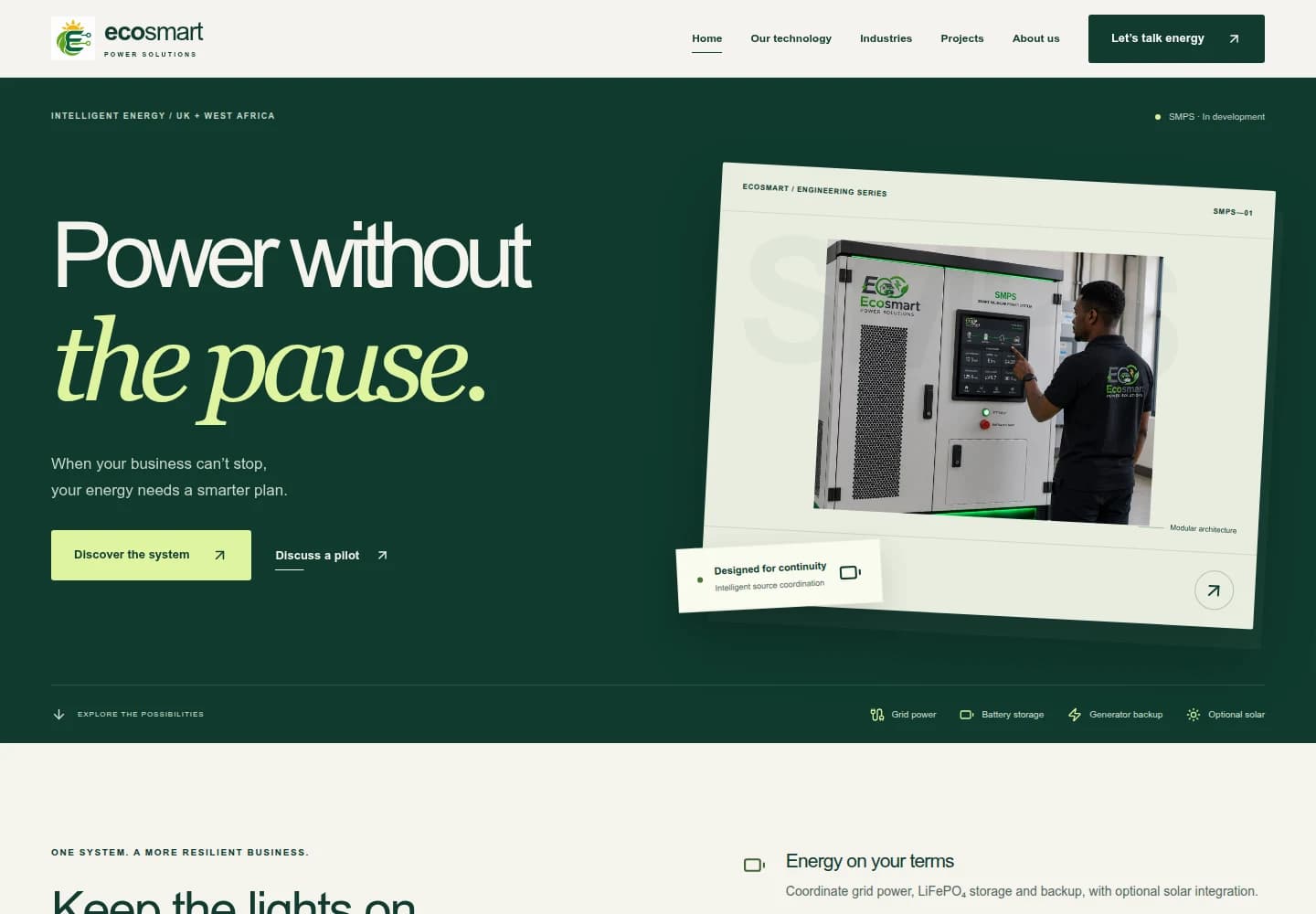
Energy technology · Website
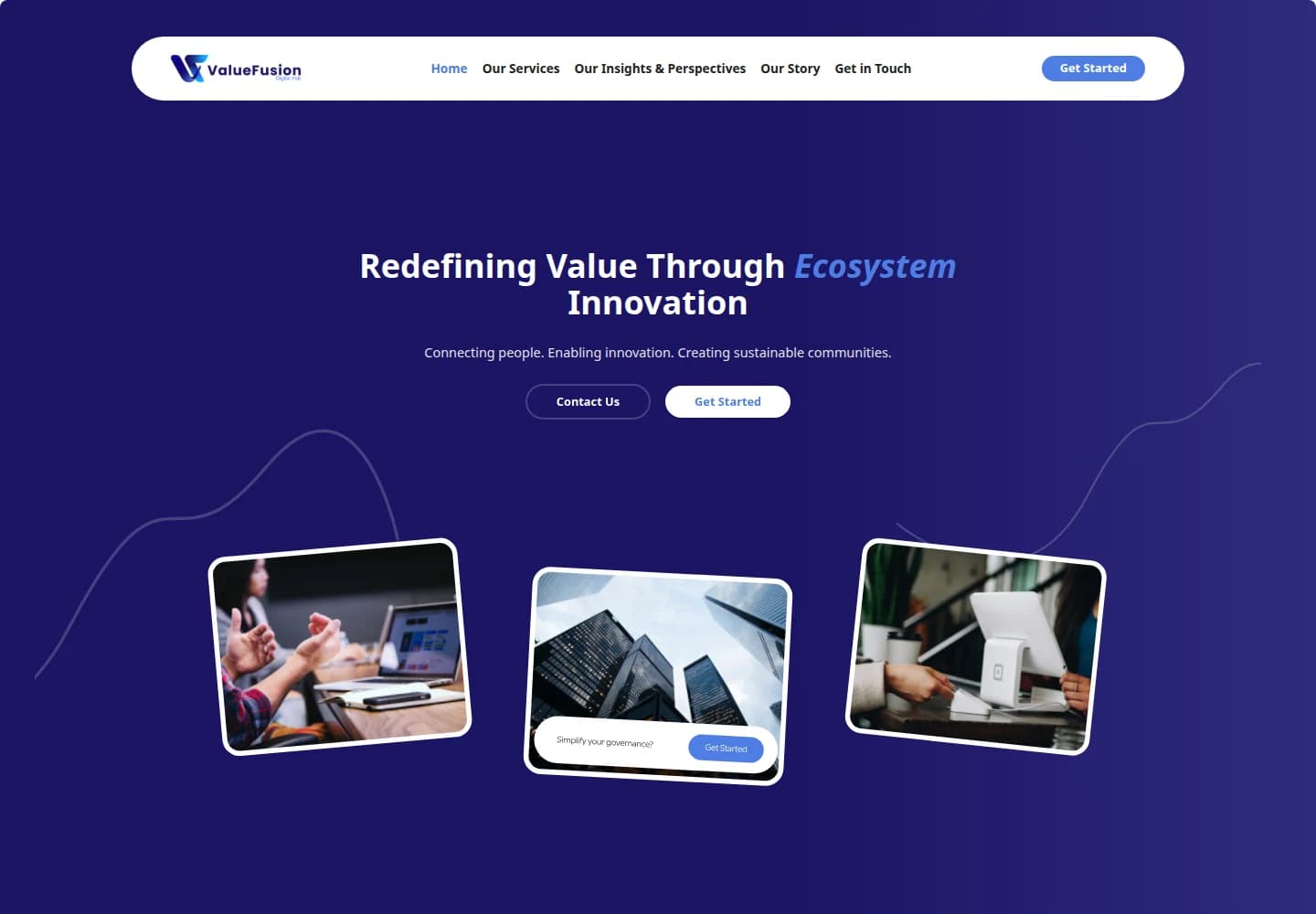
Digital innovation · Web + brand
Tell us about your business, your goals and what you need. We’ll help you define the right next step.
Discuss your projecthello@apporal.digital